
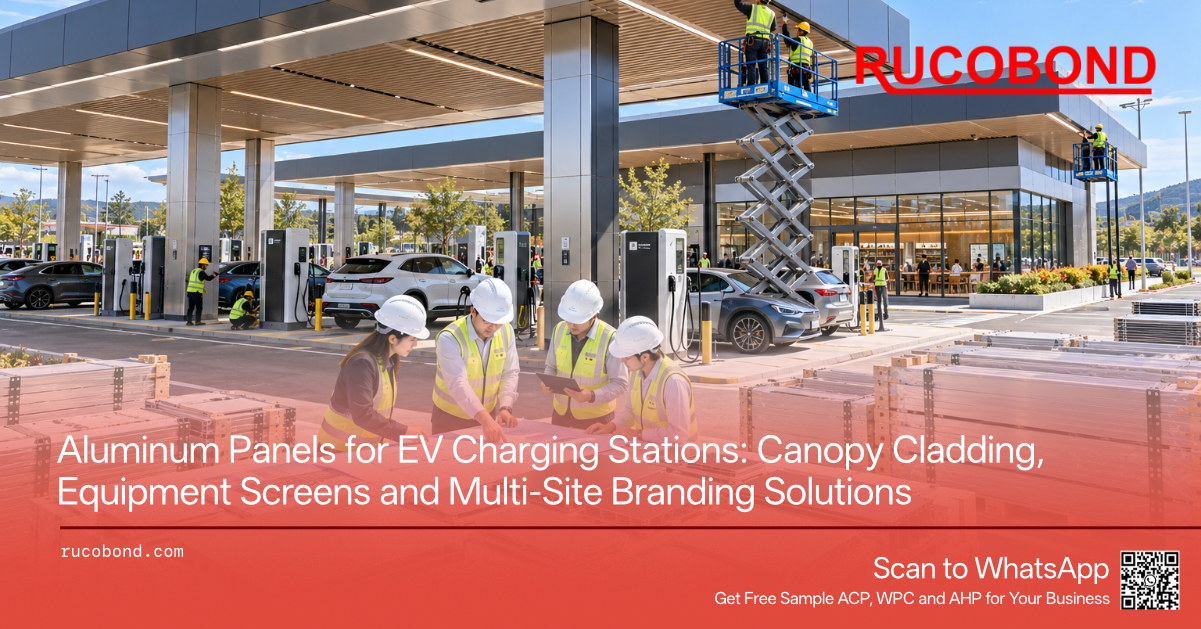
An electric vehicle charging station is no longer necessarily a few chargers installed beside an existing parking lot. Larger charging developments can include covered charging bays, passenger waiting areas, convenience retail, equipment enclosures, service buildings and pedestrian connections. These facilities combine electrical infrastructure with a public-facing commercial environment, creating material requirements that differ from ordinary building decoration.
For charging network operators, the physical appearance of each location contributes to brand recognition and the customer experience. A driver approaching an unfamiliar station should be able to identify the charging area, locate the equipment and understand where to park. Clear architectural features, coordinated colors, weather protection and visible wayfinding can help achieve this objective. At the same time, the structures must accommodate vehicle movement, mechanical and electrical equipment, outdoor exposure and routine maintenance.
Consider a highway charging hub containing twelve charging bays, a covered pedestrian area and a small convenience store. The operator may want a consistent charcoal-and-silver architectural design across the charging canopy, service building and directional signage. Aluminum Composite Panels can provide decorative cladding for suitable solid wall sections, while customized Aluminum Veneer can be considered for canopy edges, entrance frames and architectural covers. Different components require different engineering considerations, so material selection should follow their actual functions.
Founded in Guangzhou, China in 2013, Rucobond manufactures and exports Aluminum Composite Panels, Aluminum Veneer, Aluminum Honeycomb Panels, Aluminum Coils and other architectural materials. The company serves construction contractors, architectural metalwork fabricators, building material importers, distributors and project procurement teams requiring customized specifications and bulk production.
For professional EV charging construction projects, the objective is to create a material package that can support recognizable station design, efficient installation and long-term maintenance. Choosing aluminum products should therefore be part of the broader site development plan rather than a decorative decision made after the electrical infrastructure has already been installed.
Aluminum Composite Panels can be considered for suitable nonstructural wall cladding, decorative building surrounds, signage backgrounds and other architectural areas within EV charging developments. Their relatively low weight, smooth surface appearance and fabrication flexibility allow contractors to create consistent finishes across different site layouts without relying entirely on complex custom metalwork.
A charging hub may include a small convenience store, payment or information area, passenger lounge and service facilities. These buildings often need a coordinated appearance that reflects the operator's identity. Matte charcoal ACP can form a neutral exterior background, silver metallic panels can complement glass and steel, and selected corporate colors can define entrances or signage zones. The exact material construction and coating should follow the intended application and relevant project requirements.
Rucobond supplies ACP in matte solid, high-gloss, metallic, brushed, mirror, wood grain and stone-inspired finishes. For outdoor charging infrastructure, practical solid colors and selected metallic finishes are often useful because they can be repeated across different station designs. Decorative patterns may be introduced in convenience retail or sheltered passenger areas where a warmer visual appearance is desired.
Fabrication flexibility also matters. ACP can be cut, routed and folded into suitable wall modules and decorative surrounds, allowing local fabricators to adapt the material to approved dimensions. For charging networks building numerous stations, repeated sheet specifications can simplify purchasing and reduce the need to approve completely different products at every location.
However, ACP should not be confused with the electrical or structural elements of a charging installation. It should not serve as an improvised charger enclosure, an unverified fire-protection barrier or a substitute for an engineered canopy support system. Applications close to electrical equipment require coordination with equipment manufacturers and the responsible designers.
Rucobond can discuss panel thickness, aluminum skin, core requirements, coating, color and dimensions according to project specifications. Contractors should identify whether the proposed ACP will be installed outdoors, in a sheltered area or inside a service building, allowing the material to be evaluated for its actual operating environment.
Covered charging bays can improve the customer experience by providing protection from direct sunlight and rain while drivers connect charging cables, access their vehicles or move between the charging equipment and nearby facilities. The canopy itself may become the most recognizable architectural element of the station, particularly when the operator repeats the design across multiple locations.
Aluminum Veneer offers fabrication flexibility for selected architectural components associated with these canopies. Folded roof-edge covers, column cladding, entrance frames, decorative fascia panels and customized metal details can be manufactured according to approved drawings. These elements can help conceal parts of the supporting structure and create a consistent appearance without requiring every visible component to be manufactured from the same material.
Imagine a highway charging facility using a long rectangular canopy above several charging bays. The structural system may be fabricated from engineered steel or another suitable construction material, while silver metallic Aluminum Veneer forms the visible roof-edge covering. Darker panels can be used around column bases or selected architectural details, and the same colors can continue onto the adjacent convenience building.
Rucobond supports drawing-based Aluminum Veneer manufacturing, including customized dimensions, folds, selected curved components, perforations and surface finishes. Buyers should provide fabrication drawings showing the intended geometry, aluminum thickness, edge returns, quantities and coating requirements. Where a component forms part of a canopy enclosure, the drawing should also identify its interface with the supporting structure.
The canopy must still be engineered for the relevant loads and environmental conditions. Wind resistance, rainwater drainage, vehicle-clearance requirements, structural movement and the complete fixing system must be addressed by qualified project professionals. Aluminum Veneer cladding does not replace the load-bearing structure beneath it.
For charging network developers, a standardized canopy design can also simplify future projects. Once the visible metal components and their manufacturing specifications have been confirmed, repeated modules can support consistent branding across multiple sites. Custom elements may still be required for particular locations, but the core architectural language can remain recognizable.
The underside of a charging canopy is often highly visible to customers. Drivers may spend several minutes beneath the structure while connecting their vehicles, checking charging information or walking toward a convenience store. Unlike an inaccessible roof surface, the canopy ceiling is viewed at relatively close range and may contain lighting, cameras, signs and other equipment.
This makes panel flatness, joint layout and surface finish important design considerations. Large uninterrupted soffit areas can look clean and organized, but the selected material must be appropriate for the span, installation arrangement and outdoor conditions. Architectural lighting may also reveal inconsistent joints or reflections across adjacent panels.
Aluminum Veneer can be considered for customized soffit covers, folded perimeter details and areas requiring specific geometry. Aluminum Honeycomb Panels may be evaluated for certain larger-format architectural surfaces where relatively low weight and higher rigidity offer an advantage, provided the product and complete installation system are suitable for the exposure and relevant requirements.
ACP may be used for certain sheltered decorative applications if the project specification and approved assembly permit it. However, an overhead public installation should not be selected based only on appearance or sheet price. Fire performance, fixing security, applicable building regulations and environmental exposure must be considered for the complete system.
A charging canopy with integrated linear lighting provides a useful example. The architect may want a repeated pattern of rectangular metal panels with narrow joints, while the electrical contractor needs lighting channels and equipment connections. If these requirements are coordinated late, the resulting panel openings may interrupt the intended layout or require expensive fabrication changes.
Rucobond can discuss custom aluminum panel dimensions, finishes and edge details according to the approved project drawings. Buyers should provide reflected ceiling plans, equipment-opening requirements and material schedules when requesting quotations for extensive canopy soffits.
For large charging networks, the opportunity lies in repeating an approved design across multiple locations. A consistent ceiling panel module, combined with coordinated lighting and signage positions, can simplify manufacturing and create a recognizable station environment without requiring every site to use identical overall dimensions.
EV charging stations contain equipment with requirements that must be respected independently of the architectural design. Chargers, electrical cabinets, transformers, cooling components and related infrastructure may require ventilation, access clearances, cable routing and protection from environmental exposure. These requirements vary according to equipment design and the applicable electrical standards.
Architectural aluminum panels can contribute to the appearance of the surrounding site, but they should never obstruct required cooling airflow or restrict maintenance access. A decorative equipment screen that looks appropriate from the road may create operational problems if it is positioned too close to ventilation openings or service doors.
For example, a charging hub may contain electrical equipment cabinets near the rear of the site. The developer may want to conceal these cabinets behind a coordinated aluminum screen. Perforated Aluminum Veneer could be considered for architectural screening, but the pattern, open area, distance from equipment and enclosure arrangement must be checked against the manufacturer's requirements. A nominal perforation percentage alone does not guarantee acceptable cooling performance.
The same principle applies to protective enclosures. Standard decorative ACP should not be assumed suitable for manufacturing charger housings or regulated electrical cabinets. These products require their own verified construction, electrical protection and safety characteristics. Any aluminum material proposed near the equipment must remain within the approved engineering scope.
Vehicle movement also creates potential impact risks. Canopy columns, charger islands and nearby equipment may require protective barriers or other measures established by the site designer. Decorative column cladding does not provide vehicle-impact protection unless the complete system is specifically engineered and verified for that function.
Rucobond can manufacture suitable architectural Aluminum Veneer and other panel components according to approved drawings, but the charging-equipment manufacturer and responsible electrical, mechanical and structural engineers must determine the functional requirements.
For procurement teams, the key is identifying which items belong to the architectural material package and which belong to the specialist electrical infrastructure. Clear boundaries reduce the risk of ordering visually compatible products that cannot be approved for their intended installation.
Charging stations operate outdoors, often with continuous exposure to sunlight, rain, airborne pollution and temperature changes. The correct coating and material specification therefore matter, especially for network operators expecting their facilities to maintain a consistent appearance over many years.
A charging hub in Southeast Asia may experience strong sunlight, high humidity and frequent rainfall. A station in the Middle East may face intense heat and dust, while a coastal location may introduce additional corrosion considerations. These environments do not necessarily require identical specifications, even when every station uses the same corporate colors.
Rucobond supplies various architectural aluminum finishes and can discuss appropriate coating systems according to the intended application and project requirements. For exterior architectural cladding, PVDF-based and other qualified weather-resistant coating systems may be considered where specified. The actual performance requirements should be defined according to the product, local environment and relevant standards rather than inferred from the coating name alone.
Color selection also influences visual maintenance. Matte grey and silver finishes can provide a controlled appearance across broad surfaces, while darker colors create stronger contrast around branding and canopy edges. Highly reflective finishes may make certain surface variations more visible under directional sunlight, particularly across large flat areas.
Consider a charging operator developing sites in several regions. The company may prefer to maintain one general brand palette while adjusting technical coating requirements according to local conditions. The visible colors can remain recognizable, but the purchasing specifications should account for the different environments.
Protective film and handling procedures deserve attention during construction. Panels may pass through warehouses, local fabrication workshops and active construction sites before installation. Appropriate packaging and surface protection help reduce damage, while installation teams should follow the manufacturer's handling and protective-film removal guidance.
Rucobond can discuss approved finish references, customized colors and repeat manufacturing for professional projects. For charging networks, retaining complete coating and color specifications can improve consistency when new stations are added or existing sites require replacement materials.
A single charging station may require a relatively modest quantity of architectural materials. A network operator building dozens or hundreds of stations faces a different procurement problem: maintaining consistent design while accommodating variations in land size, electrical infrastructure, charger arrangement and local construction requirements.
Standardized aluminum panel specifications can help address this challenge. Instead of selecting new products for every location, the operator can establish a core material palette covering service buildings, canopy edges, suitable soffits and decorative screens. Dimensions can also be standardized where the architectural system uses repeated modules.
For example, a charging company may develop a recognizable design using charcoal Aluminum Veneer canopy edges, silver metallic ACP on service buildings and selected branded colors around entrances. The number of charging bays may vary between sites, but the material specifications and visible design elements can remain consistent.
This creates purchasing advantages. Contractors can use familiar product codes, local fabrication workshops can work with repeated dimensions and the operator can retain approved physical samples. Distributors may also hold selected materials in inventory when recurring demand justifies it.
However, standardization should not override local conditions. A canopy suitable for one site may require different structural support, height clearance or drainage details at another. Likewise, coating, fire and installation requirements may vary by country and application. The standardized material package should therefore remain distinct from the engineering approval required at each location.
Rucobond supports discussions about repeat specifications, custom dimensions, selected colors and OEM or ODM arrangements for professional buyers. Private-label protective film, packaging and product identification can also be considered according to the order requirements.
For regional distributors, charging-network development can create recurring material demand rather than a single large construction purchase. Maintaining stable specifications can help distributors respond to contractors working on new stations, renovations and expansion projects.
The most useful procurement strategy combines a repeatable visual identity with enough flexibility to accommodate the technical requirements of individual sites.
EV charging infrastructure is intended for ongoing public use, and architectural materials will be exposed to routine cleaning, equipment servicing and occasional accidental damage. Network operators therefore need to consider maintenance when selecting panels, especially across sites that may be geographically dispersed.
A damaged canopy edge, scratched service-building panel or dented column cover may seem like a minor issue at one location. Across a network of fifty charging stations, however, inconsistent replacement materials and repeated small repairs can become a meaningful maintenance expense.
Standardized colors and panel dimensions can simplify this process. If several stations use the same material specification, replacement orders are easier to organize. A local distributor may be able to supply the required product without searching for a custom finish that was last manufactured several years earlier.
Rucobond can discuss repeat production based on approved samples, confirmed product specifications and available order references. Buyers should retain original drawings, dimensions, coating information, finish references and panel codes where applicable. These records are especially useful for custom Aluminum Veneer components that cannot be identified accurately from exterior measurements alone.
Service access also matters. Architectural panels should not permanently block electrical cabinets, equipment inspection points, drainage components or other systems requiring maintenance. Where removable covers or access panels are needed, their design should be confirmed before manufacturing.
For exposed outdoor materials, maintenance teams should follow appropriate inspection and cleaning guidance. Some finishes may reveal scratches, fingerprints or dust more readily than others, and unsuitable cleaning methods can damage decorative coatings. Material selection should therefore consider expected cleaning practices as well as the appearance of a new installation.
A network operator may also renovate older charging locations to match an updated brand design. In such cases, a coordinated replacement program can be more practical than attempting to replace isolated panels with exact visual matches to weathered materials.
The objective is to manage architectural finishes as part of the charging network's long-term infrastructure rather than treating them as disposable decoration.
Charging network construction often occurs in phases. Some locations may be completed quickly, while others remain subject to permitting, electrical connections, site preparation or changes in the installation schedule. This creates challenges for contractors importing customized aluminum components.
A project may require standard ACP sheets for several service buildings, repeated Aluminum Veneer canopy components and smaller quantities of custom panels for unusual site layouts. These materials may be produced according to a common design standard but delivered to different local contractors or warehouses.
A clear material schedule is therefore essential. The purchasing team should identify each component's type, dimensions, thickness, coating, finish, quantity and intended site or installation zone. Customized Aluminum Veneer should have approved fabrication drawings and panel identification where necessary.
Rucobond supports manufacturing discussions for both standard ACP and drawing-based Aluminum Veneer orders. Buyers can provide the total program quantity along with proposed delivery phases, allowing production and shipment requirements to be reviewed according to actual factory scheduling and manufacturing feasibility.
Packaging is particularly important for customized canopy components. Long folded edges, curved pieces or unusually shaped panels may require additional protection during export. Standard sheets can usually be arranged more regularly, while fabricated metal components may need different pallet configurations.
Container planning should also consider the destination handling arrangements. Some charging projects receive materials through established distributor warehouses, while others require delivery to specialized fabrication facilities. The ability to unload, store and move oversized components should be confirmed before final packaging arrangements are approved.
For multi-country charging networks, documentation and labeling become more important because different contractors may receive materials produced under the same general program. Clear product codes and shipping records can help maintain consistency and reduce confusion.
Rucobond can discuss OEM and ODM production, customized finishes, packaging identification and phased bulk supply according to the confirmed order requirements. Buyers should communicate schedule changes promptly because manufacturing and shipping arrangements depend on the approved material specifications and production stage.
Efficient delivery requires more than manufacturing the correct components. The materials must also arrive in a form that allows the receiving teams to identify and install them according to the construction program.
EV charging infrastructure combines electrical systems, vehicle circulation and commercial architecture within the same development. For construction contractors and charging network operators, architectural materials should support a recognizable station identity without interfering with equipment operation, safety requirements or long-term maintenance.
Established in 2013 and headquartered in Guangzhou, Guangdong, China, Rucobond manufactures and exports Aluminum Composite Panels, Aluminum Veneer, Aluminum Honeycomb Panels, Aluminum Coils, WPC products and Sintered Stone Slabs for international construction markets. The company serves general contractors, architectural metalwork fabricators, building material importers, distributors and project procurement teams requiring bulk manufacturing and customized specifications.
Why choose Rucobond? Its product range allows professional buyers to discuss ACP for suitable service-building cladding, customized Aluminum Veneer for canopy edges and architectural screens, and selected Honeycomb Panel applications where larger formats and higher rigidity are appropriate. Multiple material categories can be coordinated through clearly defined project specifications and approved finish references.
Rucobond supports discussions about panel thickness, aluminum skin, core requirements, coating systems, custom colors, fabrication drawings, dimensions and packaging. OEM and ODM cooperation can also include selected finishes, protective film, private-label product identification and repeat manufacturing according to the order requirements.
For projects involving electrical infrastructure, the boundary between architectural cladding and specialist equipment must remain clear. Charging equipment, ventilation, electrical safety, canopy structures and other regulated elements require their own engineering and compliance assessment. Relevant SGS, CE and ISO-related documentation can be reviewed according to the applicable Rucobond product and certification scope, without assuming that architectural material documentation establishes compliance for the entire charging installation.
For a useful quotation, buyers should provide the project application, architectural drawings, material schedule, intended panel specifications, colors, dimensions, estimated quantities, destination and construction timeline. Operators planning multiple stations should also identify repeated components, anticipated total volumes and any site-specific variations.
Rucobond welcomes bulk enquiries from EV charging network developers, highway service-area contractors, commercial construction companies, architectural metalwork suppliers, building material distributors and international importers. Send the drawings, BOQ, finish references and expected purchasing program to discuss suitable products, customization and export supply.
A successful charging station should remain recognizable, functional and practical to maintain across many years of operation. Selecting suitable aluminum materials and establishing repeatable specifications can help operators develop consistent infrastructure while giving contractors a more organized route from design approval to construction.
Q: Can Aluminum Composite Panels be used for EV charging stations?
A: ACP can be considered for suitable decorative cladding, service-building walls and signage backgrounds when the product specification and installation system meet the project requirements. It should not be assumed suitable for manufacturing electrical equipment housings, fire-protection barriers or structural supports without specific engineering and compliance verification.
Q: What aluminum material is suitable for EV charging station canopy edges?
A: Aluminum Veneer is often worth evaluating for customized canopy edge covers, folded architectural components and column cladding because it can be manufactured according to approved drawings. The complete canopy structure, connections and environmental loading requirements must be designed separately.
Q: Can Rucobond provide the same aluminum panel colors for multiple charging stations?
A: Rucobond can work from approved physical samples and confirmed product specifications to support repeat manufacturing. Charging network developers should provide their preferred colors, coatings, estimated quantities and construction rollout schedule to discuss a standardized supply arrangement.
Q: Are perforated aluminum screens suitable around EV charging equipment?
A: Perforated Aluminum Veneer can be considered for architectural screening where approved by the equipment manufacturer and relevant engineers. The required ventilation openings, equipment clearances, maintenance access and electrical safety conditions must be confirmed before the panels are manufactured.
Q: Does Rucobond support bulk aluminum panel orders for EV charging network construction?
A: Yes. Rucobond supports professional bulk and customized manufacturing discussions involving ACP, Aluminum Veneer and Aluminum Honeycomb Panels. Buyers should provide architectural drawings, product specifications, finishes, quantities, destination and expected delivery phases so manufacturing and export arrangements can be evaluated.
Name: Gina Chen
Mobile:+86-189-2412-4951
Tel:+86-189-2412-4951
Whatsapp:8618924124951
Email:gina@rucobond.com
Add:Room 708, No. 8 Jingang Avenue, Nansha Street, Nansha District, Guangzhou


