
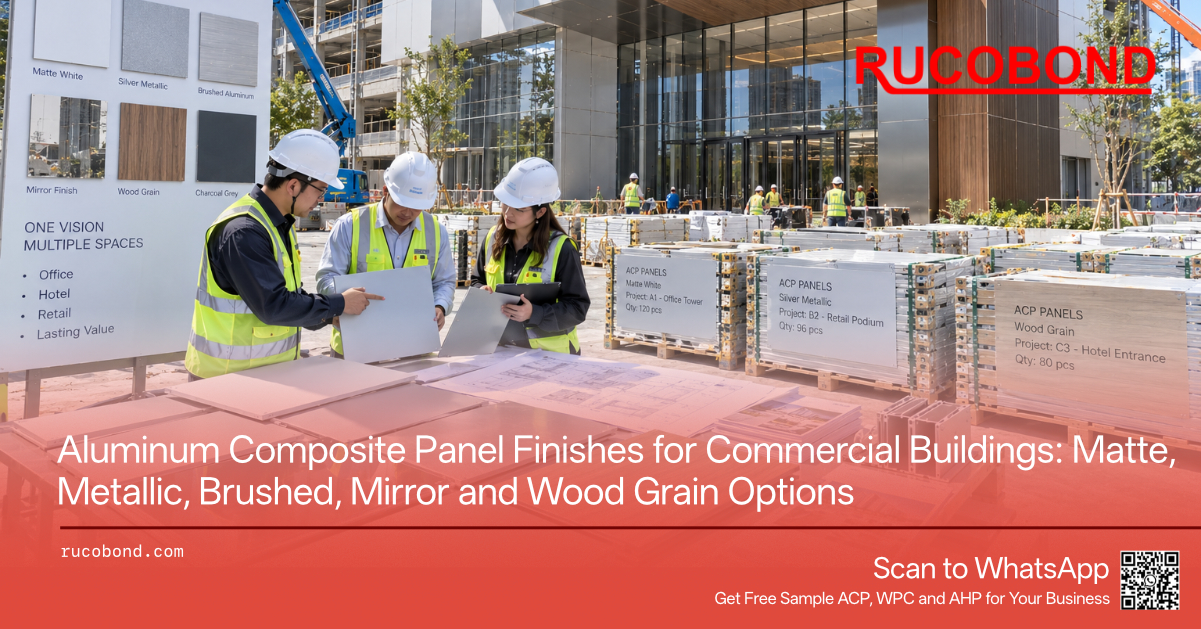
Why Surface Finish Matters in Commercial Building Projects
When buyers compare Aluminum Composite Panels, thickness and coating usually receive most of the technical attention. Surface finish is sometimes treated as the decorative part that comes later. In reality, finish selection affects how a building looks at different distances, how strongly surfaces reflect daylight, how easily different architectural materials work together and how clearly small installation differences become visible.
A finish that looks excellent on a 300 × 300 mm sample may behave very differently across several thousand square meters. High-gloss colors become more dominant at scale. Metallic surfaces react strongly to sunlight and viewing angle. Mirror panels reflect everything around them, including things the designer may not have intended to become part of the architecture. Wood grain patterns need direction control, while brushed surfaces can appear inconsistent if sheets are rotated during fabrication.
Founded in Guangzhou, China in 2013, Rucobond manufactures and exports Aluminum Composite Panels, Aluminum Veneer, Aluminum Honeycomb Panels, Aluminum Coils, WPC products and Sintered Stone Slabs for international construction projects. Rucobond supplies solid matte, glossy, metallic, mirror, wood grain, brushed and stone-inspired ACP finishes for contractors, building material importers, distributors and decoration companies.
For professional buyers, the right question is not simply “Which finish looks better?” The more useful question is “Which finish suits this building, this application, this lighting condition and this budget?” Once those variables are clear, surface selection becomes much more practical.
Matte Solid Colors for Clean and Controlled Exterior Design
Matte solid colors are among the most versatile ACP finishes because they create a controlled appearance without excessive reflection. White, grey, black, beige and muted corporate colors are commonly used across office buildings, commercial developments, residential podiums, schools, hospitals, supermarkets and other projects where broad surfaces need to remain visually calm.
The main advantage of matte finishes is predictability. They usually react less dramatically to changing light than metallic or mirror surfaces, making them easier to use across large wall areas. This can be particularly useful on buildings with many windows, signs or other materials already competing for attention.
A supermarket chain, for example, may use neutral grey panels across most exterior wall areas and reserve brighter corporate colors for entrances and signs. A hospital may use white or light grey panels to create a cleaner visual environment. A residential development may combine matte charcoal with glass and concrete without making the building excessively reflective.
Matte solid colors also work well for repeat projects because the design language remains straightforward. Contractors and distributors can maintain a focused group of common colors instead of stocking dozens of decorative finishes that move slowly.
Rucobond can support customized solid colors according to project requirements, with physical sample confirmation recommended where exact appearance matters. For large projects or repeat orders, approved samples and clear product references should be maintained to improve consistency.
Matte ACP rarely attempts to become the most dramatic product in the building. That restraint is exactly why it works in so many places.
Metallic ACP for Office, Retail and Transportation Buildings
Metallic finishes are widely used when architects want a stronger aluminum appearance. Silver, champagne, bronze, dark grey and other metallic tones interact with daylight and create more depth than ordinary solid colors.
Office buildings, airports, railway stations, shopping centers, automotive showrooms and corporate headquarters frequently use metallic ACP because it pairs naturally with glass, steel and modern lighting systems. Silver and cool grey finishes can create a technical appearance, while darker metallic colors provide stronger contrast around entrances and architectural frames.
The visual effect, however, needs careful control. Metallic coatings can appear lighter or darker depending on viewing angle, sunlight and sheet orientation. Two panels from the same production batch may appear different if one has been rotated during fabrication.
This means directional markings and consistent installation are important. Fabrication teams should follow the same panel orientation from cutting through installation. Physical samples should also be reviewed outdoors where possible, because indoor showroom lighting cannot fully reproduce the way metallic surfaces behave under direct sun.
Rucobond supplies multiple metallic ACP options and can work with project color references for larger orders. For commercial buildings using glass curtain systems, comparing the metallic sample directly beside the selected glass can help prevent awkward color combinations later.
Metallic finishes create more visual movement than matte colors, but that extra character comes with extra responsibility. Light, annoyingly, refuses to sign the construction drawing.
Brushed Aluminum Finishes for Premium Commercial Applications
Brushed ACP combines metallic appearance with a visible directional texture. Brushed silver and brushed gold are commonly used in premium interiors, entrances, elevator areas, retail spaces, showrooms and selected exterior decorative zones where a more refined metal appearance is desired.
The texture helps the surface feel less flat than a standard solid color. Under changing light, the brushed lines create subtle variation without producing the full reflection of a mirror finish. This makes brushed ACP useful in commercial environments where designers want visible metal character but not a highly reflective surface.
Automotive showrooms may use brushed silver around reception areas or entrance walls. Hotels can use brushed gold or warmer metallic tones in lobby features. Retail stores and shopping centers may use brushed panels around escalators, columns or signage zones.
Direction control is essential. The brushed pattern should normally run consistently across adjacent panels. If one sheet is rotated, the texture reflects light differently and can appear like another finish entirely.
Rucobond can provide brushed finishes with protective film markings to help maintain direction during fabrication. Buyers should also confirm the intended pattern orientation in drawings or installation instructions for larger projects.
Brushed ACP is especially effective when used selectively. Covering every available wall in brushed metal can quickly turn a refined detail into something resembling a very ambitious appliance showroom. A smaller amount in the right place usually creates stronger impact.
Mirror ACP for Interior Features and High-Impact Decorative Areas
Mirror ACP creates one of the strongest visual effects available in the Aluminum Composite Panel category. Its reflective surface can make interior spaces feel larger, create dramatic feature walls and add a polished appearance to retail or hospitality projects.
Typical applications include elevator interiors, retail displays, hotel decoration, reception features, ceiling details and selected commercial interior walls. Mirror surfaces can also be used in artistic or branded installations where reflection is intentionally part of the design.
The same reflectivity that makes the product visually attractive also makes it less forgiving. Scratches, fingerprints, uneven installation and surface distortion are more noticeable. The surrounding environment becomes part of the finished appearance because everything nearby is reflected.
For this reason, mirror ACP usually performs best in controlled decorative areas rather than enormous exterior surfaces. Designers should consider what the panel will reflect before specifying it. A beautiful lobby ceiling may create an elegant reflection. A service corridor full of pipes may contribute something more experimental.
Handling and protective film are also particularly important because surface damage becomes obvious after installation. Rucobond supplies mirror-style ACP for suitable decorative applications and can discuss dimensions, colors and quantity according to project requirements.
Mirror finishes are strongest when they have a clear purpose. Reflection should be part of the design, not an accidental side effect discovered after installation.
Wood Grain ACP for Hospitality, Retail and Restaurant Projects
Wood grain ACP is popular in projects that want a warmer visual character without using natural timber across every surface. Hotels, restaurants, cafés, retail stores, resorts, commercial entrances and interior decoration can all benefit from wood-inspired finishes.
The material allows designers to combine the visual language of timber with the fabrication advantages of Aluminum Composite Panels. Panels can be cut, routed and folded into wall systems, columns, entrance frames and decorative details while maintaining a consistent pattern.
A hotel entrance may combine wood grain ACP with dark Aluminum Veneer and glass. A restaurant chain may use the same wood pattern across multiple locations to maintain recognizable branding. Shopping centers can use wood-inspired panels around food courts and leisure areas to soften otherwise metal-heavy interiors.
Pattern direction matters. Wood grain usually has a clear visual orientation, so adjacent panels should be planned before fabrication. Randomly rotating pieces can make the finished surface look fragmented even when the material itself is correct.
Rucobond supplies multiple wood grain ACP options and supports project-based color and pattern selection. For chain projects, approved finish references should be retained so later locations can follow the same visual standard.
Wood grain ACP works best when it supports the surrounding design rather than trying to impersonate an entire forest. Used with restraint, it can add warmth without creating the maintenance burden associated with many natural wood applications.
Stone-Inspired ACP for Commercial Interiors and Renovation Work
Stone-inspired ACP provides another decorative option for projects that want marble, granite or other mineral-like visual effects without using heavy natural stone across every surface. These finishes are commonly considered for commercial interiors, retail areas, hotel walls, reception spaces and renovation projects.
The main advantage is lower weight and easier fabrication compared with many traditional stone materials. Panels can be processed into wall sections, column covers and decorative elements without requiring the same structural support associated with thick natural stone slabs.
In renovation work, this can be particularly useful. An older commercial building may need a visual upgrade without adding significant weight to existing walls. Stone-inspired ACP can create a cleaner new surface while preserving a relatively lightweight system.
The buyer should still understand that decorative ACP and genuine stone are different materials. Surface depth, texture, impact resistance and installation methods are not identical. The product should be selected for applications where its own properties make sense rather than marketed as a magical replacement for everything quarried from the earth.
Rucobond supplies stone-inspired ACP in several patterns and can coordinate these products with Sintered Stone Slabs where a project requires both lightweight wall panels and more substantial stone-like surfaces in selected areas.
This combination gives designers flexibility. ACP can handle broad decorative walls, while Sintered Stone can be reserved for counters, tabletops or other locations where different surface performance is required.
Matching Finish, Lighting and Building Scale Before Bulk Production
Surface selection should always consider scale. A finish that appears subtle on a small sample may become much stronger across a complete wall, while a pattern that looks detailed up close may nearly disappear when viewed from thirty meters away.
Lighting also changes appearance. North-facing walls receive different light from west-facing walls. Shopping mall interiors depend on artificial lighting. Hotel lobbies may combine warm lighting with daylight. Metallic, brushed and mirror surfaces can react dramatically to these conditions.
For large projects, sample approval should therefore happen under conditions reasonably close to the real application. Exterior samples should be viewed outdoors. Interior finishes should be checked under the actual lighting temperature where possible.
Architectural renderings are useful for overall design, but they should not replace physical material review. Rendering software can make almost any finish behave politely. Real aluminum has fewer concerns about the designer’s intentions.
Rucobond can provide samples for professional project evaluation and supports custom finish discussion according to order requirements. For large commercial projects, combining samples of ACP, glass, Aluminum Veneer and other surrounding materials can help the design team understand how the final surfaces will interact.
Building scale also influences whether a finish should be used broadly or selectively. Matte and metallic surfaces can often cover larger zones successfully, while mirror and strong decorative patterns may work better as accents.
Good finish selection is not about choosing the most impressive sample. It is about choosing the one that still looks right after several thousand square meters have been installed.
Color Consistency, Samples and Repeat Orders for Large Projects
Large projects often require several production batches, while chain stores, hotels or dealership networks may reorder the same finish months or years later. Maintaining consistent references becomes important when new material will sit beside earlier installations.
Rucobond encourages buyers to retain approved physical samples and complete specifications including finish, coating, color, gloss level, dimensions and panel structure. These references can support later production and help reduce ambiguity during repeat orders.
Metallic, brushed, wood grain and stone-inspired finishes deserve particular attention because visual direction and surface pattern can influence appearance. Buyers should keep both the finish reference and orientation information where relevant.
Distributors can also benefit from stable product codes. Instead of describing something as “the darker silver from last time,” the sales team should be able to connect a clear code with a known specification and physical sample.
For chain projects, consistency protects the brand. A retail group opening twenty stores expects the exterior materials to remain recognizable. A hotel operator renovating several properties may want the same wood grain or metallic finish across different locations.
Repeatability therefore becomes part of the product value. The finish is not successful simply because the first shipment looked good. It becomes commercially stronger when the buyer can order it again without starting the entire approval process from zero.
Humans have already invented enough shades of grey to make this difficult. Good records at least prevent everyone from naming them again.
Building a Practical Finish Range with Rucobond
Contractors and distributors do not need every ACP finish in the catalog. A more useful strategy is building a range around the applications that actually generate demand.
For general commercial construction, matte white, grey, charcoal and silver metallic can provide a strong foundation. Brushed finishes can serve premium retail and interior projects. Wood grain can target restaurants, hotels and decoration companies. Mirror products can remain focused on decorative applications, while stone-inspired finishes support renovation and commercial interiors.
Distributors can keep core products in regular inventory while handling slower decorative finishes through project orders. This reduces warehouse pressure while maintaining enough range to respond to different customer needs.
OEM and ODM cooperation can also include private-label protective films, packaging, selected finishes and product codes according to order requirements. A regional distributor can therefore build a recognizable collection instead of selling unrelated products under constantly changing descriptions.
Contractors should provide application, dimensions, finish, quantity, destination and expected schedule when requesting project prices. For exterior work, coating and environmental conditions should also be identified clearly.
Rucobond welcomes cooperation with construction contractors, building material importers, distributors, decoration companies and project procurement teams requiring commercial quantities, repeat supply and customized production.
The best finish range is not the one that occupies the most pages in a sample book. It is the one where every sample has a believable customer waiting for it.
Q: Which ACP finish is most suitable for large commercial exterior walls?
A: Matte solid and metallic finishes are commonly selected for large commercial exterior areas because they provide relatively controlled and repeatable visual effects. The final choice should also consider coating specification, building design, climate and surrounding materials.
Q: Why do metallic and brushed ACP panels sometimes appear different after installation?
A: Metallic and brushed surfaces react to light and viewing angle, and many have a directional appearance. Panels installed in different orientations can therefore look like different shades even when they come from the same production batch.
Q: Is wood grain ACP suitable for hotel and restaurant projects?
A: Yes. Wood grain ACP can be used in suitable hospitality, retail and restaurant applications where a wood-inspired visual effect is desired together with the fabrication characteristics of Aluminum Composite Panels.
Q: Where is mirror ACP usually used?
A: Mirror ACP is commonly used for decorative interior applications such as retail displays, elevators, reception areas, ceilings and feature walls. Because reflective surfaces show scratches and installation irregularities more easily, careful handling and installation are important.
Q: Can Rucobond provide customized ACP finishes for distributors and large projects?
A: Yes. Rucobond supports project-based finish selection as well as OEM and ODM cooperation for professional buyers. Customized protective film, packaging, product identification, colors and repeat specifications can be discussed according to order requirements.
Name: Gina Chen
Mobile:+86-189-2412-4951
Tel:+86-189-2412-4951
Whatsapp:8618924124951
Email:gina@rucobond.com
Add:Room 708, No. 8 Jingang Avenue, Nansha Street, Nansha District, Guangzhou


